Understanding the DevOps Lifecycle (Step-by-Step Guide)
DevOps Lifecycle ko step-by-step samjhiye. Is guide me planning, coding, testing, deployment aur monitoring ke phases beginners ke liye simple Hinglish me explain kiye gaye hain.
Understanding the DevOps Lifecycle (Step-by-Step Guide)
Pichli post me aapne dekha ki traditional software delivery me Dev aur Ops teams ke beech communication gap kis tarah issues create karta tha.
Aapne yeh bhi samjha ki DevOps ka main goal is collaboration + automation, jisse delivery faster aur reliable hoti hai.
Ab agla natural step hai: DevOps lifecycle kaise function karta hai?
Introduction
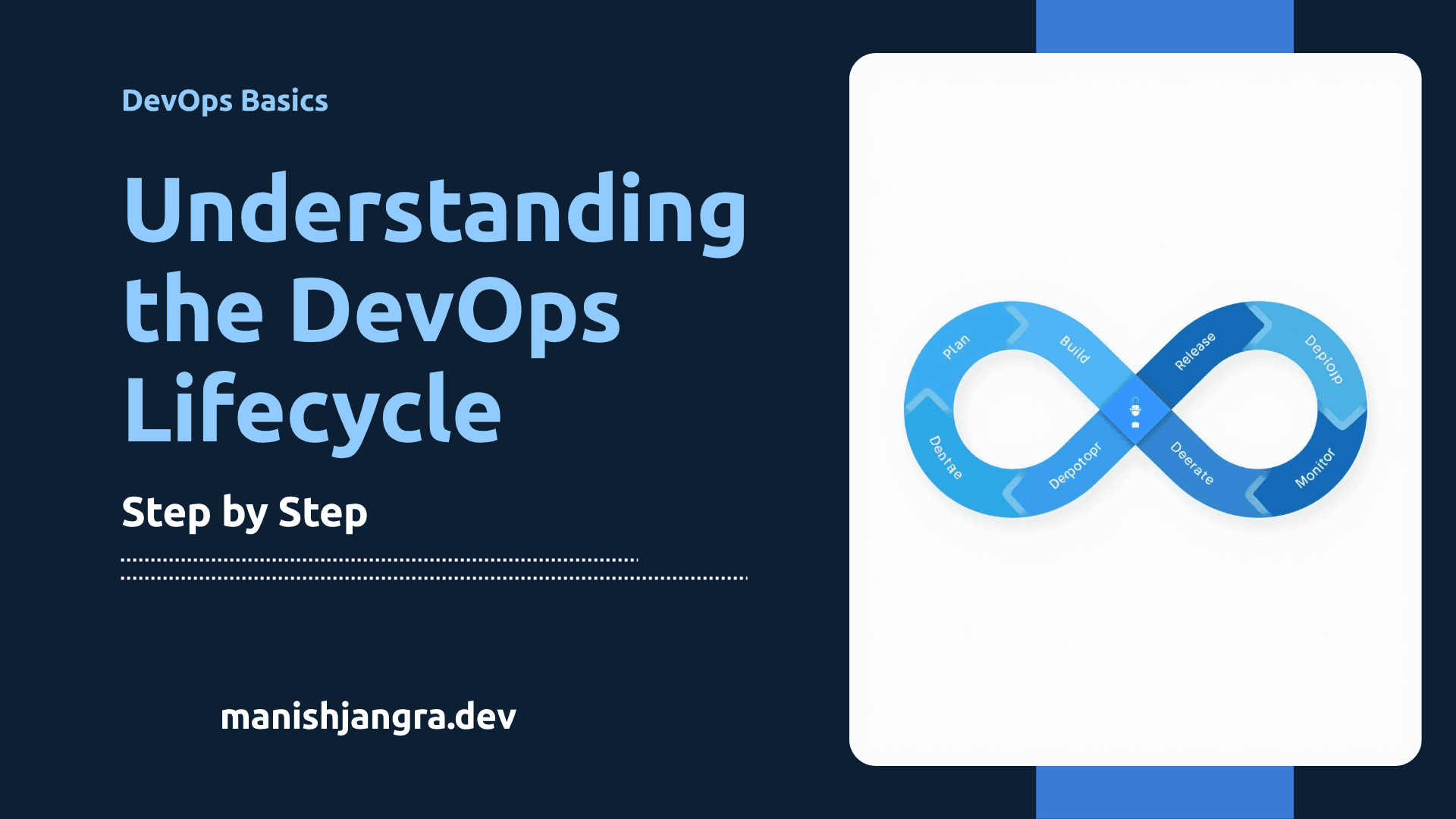
DevOps lifecycle ek continuous loop hota hai jisme planning se lekar monitoring tak sab phases interconnected hote hain.
Iska purpose hai software ko fast, reliable, scalable aur consistent manner me deliver karna.
💡 Did You Know?
Companies like Netflix and Amazon har din hundreds of deployments karte hain — DevOps lifecycle ke strong automation aur feedback loop ki wajah se.
Concept Overview
DevOps lifecycle ek structure provide karta hai jisme development aur operations ek single continuous process me kaam karte hain.
Ye lifecycle 7–8 phases me divided hai:
- Plan
- Code
- Build
- Test
- Release
- Deploy
- Operate
- Monitor
Ye phases infinite loop me chalte hain — jise DevOps Infinity Loop represent karta hai.
DevOps Lifecycle – Step-by-Step Breakdown
1. Plan – Requirement Understanding
Teams milkar clear roadmap banati hain:
- Features
- Timelines
- Use cases
- Business goals
Tools: Jira, Trello, Azure Boards
2. Code – Application Development
Developers clean aur maintainable code likhte hain.
Version control yaha key role play karta hai.
Tools: Git, GitHub, GitLab, Bitbucket
3. Build – Code Compilation & Packaging
Code ko compile kiya jata hai, dependencies install hoti hain, aur final build generate hota hai.
Tools: Maven, Gradle, Jenkins
4. Test – Quality Assurance
Automated tests ensure karte hain ki software stable hai.
Tools: Selenium, JUnit, TestNG, Cypress
5. Release – Ready for Production
Verified build release stage me move hota hai.
Tools: Jenkins, GitLab CI
6. Deploy – Push to Production
Application ko production servers par safely deploy kiya jata hai.
Tools: Kubernetes, Docker, AWS
7. Operate – Application Maintenance
Production me application smooth chal raha hai ya nahi — yeh ensure kiya jata hai.
Tools: AWS Ops, Kubernetes
8. Monitor – Continuous Visibility
Performance logs, system metrics, user experience — sab monitor kiya jata hai.
Feedback next planning cycle me use hota hai.
Tools: Grafana, Prometheus, ELK Stack
Real-World Example
Sochiye ek online food delivery platform:
- Plan: New “Live Order Tracking” feature
- Code: Developers code implement karte hain
- Build: App compile hoti hai with dependencies
- Test: Automated functional tests run hote hain
- Release: Feature approve hota hai
- Deploy: Update production me push hota hai
- Operate: Servers ensure smooth performance
- Monitor: Logs check karte hain ki users ko bug to nahi aa raha
Agar issue aata hai → feedback → cycle back to “Plan”.
Yeh continuous improvement approach DevOps ki backbone hai.
Mini Projects
Goal: DevOps lifecycle ko practically feel karna — without coding, Git, or any tools.
Task:
- Apni daily life me ek simple workflow choose karein (example: study routine, notes management, ya file organization).
- Is workflow ko DevOps lifecycle ke 8 phases me map karein:
- Plan: Kya achieve karna hai?
- Code: Kaise start karenge? (steps likhna)
- Build: Resources ready karna (folders, notes, schedule)
- Test: Workflow ek baar try karna
- Release: Improve karke final format banana
- Deploy: Daily routine me apply karna
- Operate: Daily follow karna
- Monitor: End of day review karna
- Koi improvement mile to usse “Plan” phase me add karein — cycle repeat ho jaye.
Outcome:
Aapko clear understanding milti hai ki DevOps lifecycle sirf tools nahi, balki continuous improvement mindset hai.
Real-World Industry Example
Amazon apne systems me DevOps lifecycle ka maximum use karta hai.
Automated deployments, proactive monitoring, self-healing systems — yeh sab lifecycle ke strong phases ki wajah se possible hota hai.
Is process bina downtime ke global scale handle karta hai.
QnA Section
1. DevOps lifecycle kya hota hai?
Ek continuous process jisme planning, coding, testing aur deployment ek loop me chalti hain.
2. Lifecycle me kitne phases hote hain?
Generally 7–8 interconnected phases.
3. Kya lifecycle automation par depend karta hai?
Haan, modern DevOps lifecycle mostly automated hota hai.
4. Kya beginners ko lifecycle pehle seekhna chahiye?
Bilkul — ye foundation clear karta hai before learning tools.
Conclusion
Aapne DevOps lifecycle ke saare phases ko detail me samjha — planning se monitoring tak.
Ye lifecycle modern software delivery ka backbone hai, jo teams ko fast, reliable, and automated output deliver karne me help karta hai.
Aage aap CI/CD aur automation ke core principles ko easily understand kar payenge.
Next post me hum cover karenge:
Post 4 – What is CI/CD? A Complete Beginner-Friendly Guide
Tags
Share Article
Related Articles
CI/CD Pipelines Explained (How Pipelines Actually Work)
What is CI/CD?
How Software Delivery Works: The Dev & Ops Story